
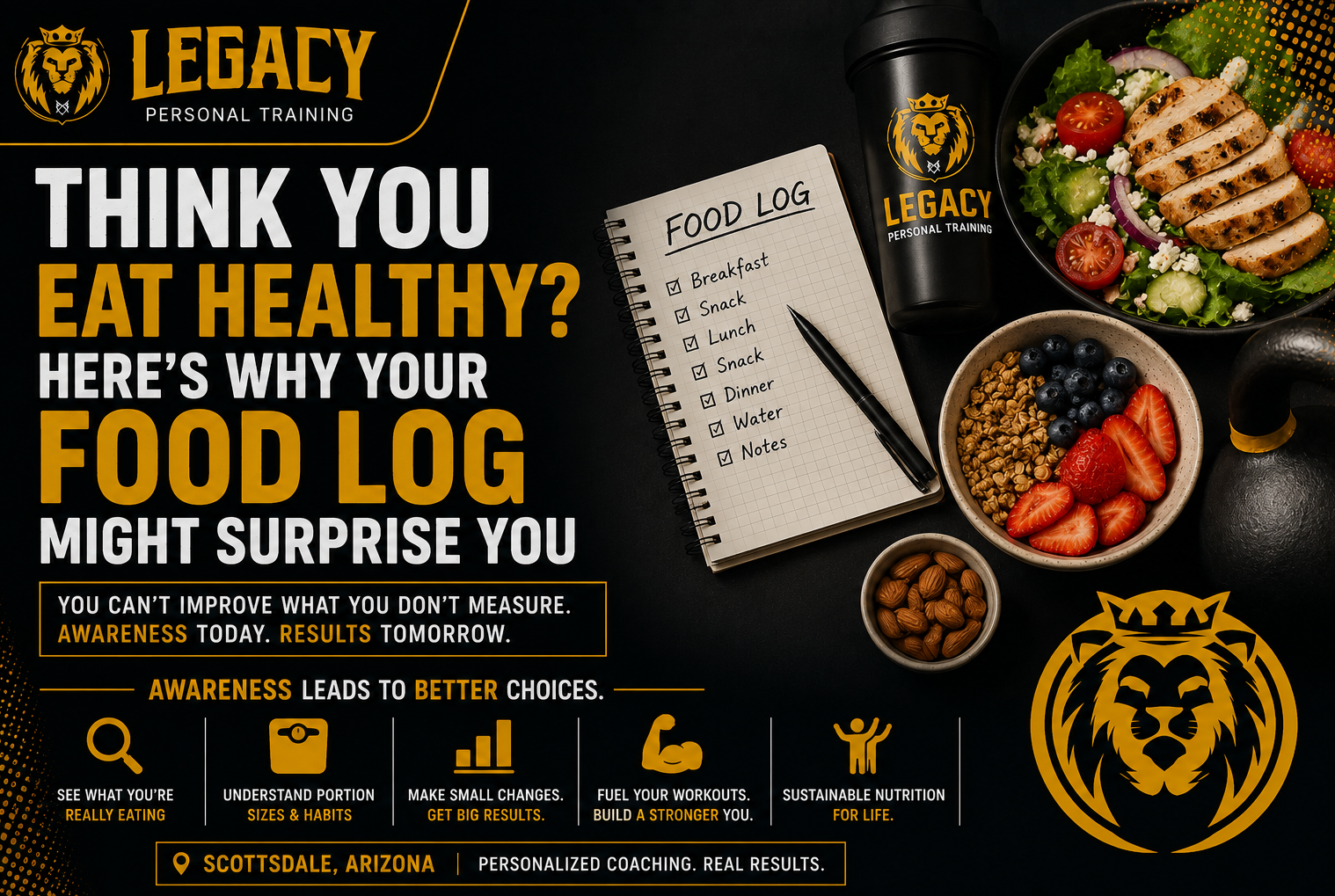
Think You Eat Healthy? Here’s Why Your Food Log Might Surprise You
If you’ve ever said, “I don’t eat that much, so I don’t know why I’m not losing weight,” you’re not alone.
In fact, it’s one of the most common things we hear from new members when they first walk through the doors at Legacy Personal Training.
Most people genuinely believe they have a pretty good idea of what they’re eating each day. But once they actually track everything for a week, they’re often surprised by what they discover.
The truth is that nutrition isn’t just about eating healthy foods. It’s about understanding your habits, recognizing patterns, and knowing whether your daily choices are actually supporting your goals.
Before you cut carbs, try intermittent fasting, or start another diet you found online, there’s one simple step that can teach you more about your nutrition than almost anything else: Track what you’re eating.
Why Most People Don’t Know What They’re Actually Eating
When someone comes to Legacy looking to lose weight, improve their energy, or build muscle, we don’t immediately hand them a meal plan.
Instead, we ask them to log everything they eat and drink for about three days without changing anything.
No dieting.
No restrictions.
No pressure to eat perfectly.
We simply want to understand what their normal routine looks like.
Why?
Because you can’t improve something you haven’t measured.
Many people think they know exactly what they eat throughout the day. But once everything is written down, the picture becomes much clearer.
Sometimes it’s extra snacks that were never really noticed.
Sometimes it’s oversized portions.
Sometimes it’s drinks that quietly add hundreds of calories and grams of hidden sugars each day.
And sometimes it’s simply that someone isn’t eating enough whole, nutritious food.
The goal isn’t judgment.
The goal is awareness.
Tracking Creates Awareness
One of the biggest benefits of food tracking has nothing to do with calories.
It forces you to slow down and pay attention.
Many of us eat on autopilot.
We grab something between meetings.
We snack while watching television.
We finish our kids’ leftovers without even thinking about it.
Those small habits add up over time.
Writing everything down helps you recognize patterns that may have gone unnoticed for years.
For many people, that awareness alone leads to healthier decisions.
They begin asking themselves simple questions like:
- Am I actually hungry?
- Am I eating because I’m stressed?
- Am I getting enough protein?
- How often am I reaching for processed foods?
Those questions create lasting habits.
Healthy Isn’t Always as Healthy as You Think
One of the biggest surprises people discover while tracking their food is that foods they believed were healthy may not support their goals.
Take salads, for example.
Ordering a salad at lunch feels like a healthy decision.
Sometimes it is.
Sometimes it isn’t.
Many restaurant salads contain creamy dressings, fried toppings, cheese, crispy noodles, and large portions that can add hundreds of extra calories without you realizing it.
The vegetables aren’t the problem.
It’s everything that comes with them.
The same is true for smoothies, coffee drinks, granola, trail mix, and many foods marketed as healthy.
Tracking your meals helps you look beyond the label and understand what’s actually going into your body.
Portion Sizes Are Often Bigger Than We Realize
Another common discovery is portion size.
Many people are eating much larger servings than they think.
A handful of nuts becomes three handfuls.
A serving of peanut butter becomes several spoonfuls.
A bowl of cereal turns into two or three servings.
None of these foods are necessarily bad.
But when portions continue growing without us noticing, calories increase quickly.
Tracking your food for even one week helps recalibrate your understanding of what a serving actually looks like.
That knowledge stays with you long after you stop tracking.
It’s Not Always About Eating Too Much
Most people assume weight gain only comes from overeating.
Sometimes that’s true. Other times, the problem is more complicated.
We’ve worked with members who skip breakfast, drink coffee all morning, barely eat during the day, and then find themselves extremely hungry at night.
By evening, they’re reaching for highly processed snacks because their body is trying to catch up.
The issue isn’t simply eating too much.
It’s eating too little during the day and making up for it later.
When your body isn’t getting enough quality nutrition, energy levels drop, cravings increase, recovery suffers, and healthy habits become much harder to maintain.
Tracking helps identify those patterns before they become long term problems.
Processed Foods Make It Easy to Overeat
One thing food logs consistently reveal is how much of the average diet comes from processed foods.
Processed foods are often:
- Higher in calories
- Lower in nutrients
- Less filling
- Easier to overeat
Because they aren’t very satisfying, it’s easy to continue eating without ever feeling completely full.
Whole foods like lean proteins, fruits, vegetables, whole grains, and healthy fats tend to provide more nutrition while helping you stay satisfied longer.
The goal isn’t perfection.
It’s gradually shifting your diet toward foods that better support your health and fitness goals.
Nutrition Is More Than Calories
Calories matter.
But they aren’t the whole story.
Two people could eat the exact same number of calories and experience very different results depending on where those calories come from.
Protein supports muscle growth and recovery.
Healthy fats support hormones and overall health.
Carbohydrates provide energy for workouts and daily activity.
Vitamins, minerals, and fiber all play important roles in how your body functions.
That’s why simply eating less isn’t always the answer.
The quality of your nutrition matters just as much as the quantity.
Why We Don’t Believe in Tracking Forever
Some nutrition programs expect people to weigh every gram of food for the rest of their lives.
At Legacy, that’s not our philosophy.
Food tracking is a learning tool.
It’s meant to build awareness, not become a permanent lifestyle.
Once you understand your habits, recognize portion sizes, and learn what balanced nutrition looks like, the goal is to transition into eating naturally with confidence.
That’s what sustainable nutrition looks like.
Our coaching focuses on building habits that fit into your life instead of asking you to obsess over every calorie forever.
Make One Change at a Time
One of the biggest mistakes people make after tracking their food is trying to change everything overnight.
They decide to eliminate sugar.
Stop eating carbs.
Start meal prepping.
Drink more water.
Increase protein.
Cut calories.
Exercise every day.
It’s too much.
Lasting results come from small, consistent improvements.
Instead of changing ten things this week, focus on one.
Maybe it’s adding more protein at breakfast.
Maybe it’s replacing one sugary drink each day.
Maybe it’s eating vegetables with dinner.
Master one habit before moving to the next.
That’s how sustainable change happens.
How Legacy Personal Training Approaches Nutrition
At Legacy Personal Training, we don’t believe in crash diets or restrictive meal plans.
Our nutrition coaching starts by understanding where you are today.
We help members identify the habits that are holding them back, create realistic goals, and make gradual improvements that support long term success.
Because every person’s lifestyle is different, nutrition should never be one size fits all.
Whether your goal is losing body fat, building muscle, improving energy, or simply feeling healthier, the first step is understanding your current habits before making changes.
That’s why awareness always comes before action.
The Bottom Line
If you’re frustrated because you’re not seeing the results you want, don’t assume you need another diet.
Start by understanding what you’re already doing.
Track your food for one week.
Be honest.
Don’t change anything.
Simply observe.
You may discover that you’re eating more than you thought.
You may realize you’re skipping meals.
You may find you’re missing important nutrients.
Whatever you learn becomes the foundation for smarter decisions moving forward.
At Legacy Personal Training in Scottsdale, we believe sustainable nutrition starts with education, not restriction. When you understand your habits, you can make meaningful changes that improve your health for years to come.