
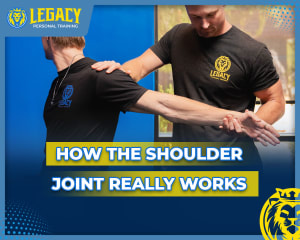
Shoulder discomfort is one of the most common issues we see in the gym, and it is also one of the most misunderstood. Many people assume shoulder pain means something is seriously wrong, when in reality it is often the result of poor movement patterns, lack of stability, or loading the joint in ways it is not ready for. In today's blog, our coaches break down why the shoulder is such a sensitive joint, how it actually works, and what needs to happen in training to keep it healthy long term. The shoulder is the most mobile joint in the body. While joints like the hips and knees are designed for stability first, the shoulder is designed for movement. That mobility comes at a cost. Structurally, the shoulder relies far more on muscles and connective tissue than bone to stay in place. The ball and socket relationship of the shoulder allows for nearly full range movement in every direction, but it also means the joint must be actively controlled at all times. Because of this, the shoulder is far more sensitive to breakdowns in movement, posture, and strength balance. When something is not moving correctly, the body often compensates, which is where pain and restriction begin to show up. One of the most overlooked components of shoulder health is how the shoulder blades move. Rather than simply sliding up and down, the shoulder blades should rotate and move smoothly around the rib cage. When this does not happen, the muscles around the shoulder are forced to work harder than they should, and the joint loses stability. This is why many people feel tightness in their traps, pinching in the front of the shoulder, or discomfort that travels down the arm. These symptoms are often the result of poor scapular movement rather than a single injured muscle. When people hear the term rotator cuff, they often think of injury. In reality, the rotator cuff is a group of small muscles that work constantly to keep the shoulder joint centered and controlled. These muscles do not generate big strength outputs, but they play a critical role in stability and control. Alongside them are secondary stabilizers like the delts, traps, rhomboids, and serratus muscles, which help connect the shoulder to the rest of the upper body. If these muscles are not trained intentionally, heavier pressing and pulling movements quickly become risky. The shoulder may still move, but it will not be supported properly. Overhead exercises place the shoulder in its most vulnerable position. This does not make them bad exercises, but it does mean they require proper mobility, control, and load management. A common issue we see is people lifting too heavy overhead. When the shoulder lacks mobility or stability, the weight drifts forward, the lower back arches, and the movement turns into something entirely different than intended. This creates a chain reaction of compensation. The shoulder blades stop moving correctly, the wrong muscles take over, and the joint experiences unnecessary stress. At Legacy, overhead training is earned through proper positioning and progressions, not forced through heavy loads. One of the most telling red flags in training is when someone can hinge or squat heavy weight but struggles to control a light overhead press. The shoulder fatigues quickly and does not tolerate poor form well. This is why starting light, focusing on control, and progressing intentionally is essential for long term shoulder health. Dropping weight is not a setback. It is often the fastest path to better movement and safer strength gains. Effective shoulder warmups are not about breaking a sweat. They are about preparing the joint to move well. This includes movements that encourage proper scapular motion, internal and external rotation, and light activation of stabilizing muscles. These drills help the nervous system understand where the joint is in space and how to control it before load is introduced. Resistance during these movements should be light. The goal is control and awareness, not fatigue. Slowing down movements, especially during the lowering phase, is one of the most effective ways to improve shoulder control and resilience. Tempo training increases time under tension, promotes blood flow, and strengthens muscles that are often undertrained. It also reinforces proper movement patterns, which carry over into more complex exercises. This approach supports both strength development and joint health. Not every exercise in a program is meant to feel impressive. Movements like face pulls, carries, and controlled overhead variations play a critical role in shoulder stability. Carrying weight at different positions challenges the shoulder to stabilize rather than simply move. These exercises improve coordination and help prepare the joint for real world demands. When these elements are included consistently within a structured program, shoulders become stronger, more mobile, and more resilient over time. Healthy shoulders are not built by avoiding movement or chasing heavy lifts. They are built through smart programming, proper mechanics, and intentional progressions. At Legacy Personal Training, our LIFT methodology emphasizes training that supports movement quality, joint health, and sustainable strength. When the shoulder is trained with these principles in mind, it becomes more capable, not more fragile. Final Thoughts At Legacy Personal Training in Scottsdale, we help adults who want to train for life, not just for today. Our LIFT methodology focuses on movement quality, joint health, and sustainable strength so our members can stay active, confident, and pain free long term. If you are tired of guessing in the gym or working around nagging shoulder issues, our coaching team is here to help you train smarter and move better for years to come.How the Shoulder Joint Really Works and Why It Matters for Training
Why the Shoulder Is Different From Other Joints
The Role of the Shoulder Blade
Primary and Secondary Stabilizers Matter
Why Overhead Exercises Can Cause Problems
Why Load Selection Matters More Than Ego
Warmups That Actually Prepare the Shoulder
Using Tempo to Build Shoulder Strength
Accessory Exercises That Support Healthy Shoulders
Training the Shoulder for Long Term Success
Strong, healthy shoulders are not built by avoiding movement or pushing through pain. They are built through smart programming, proper mechanics, and intentional progressions that respect how the body is designed to move.